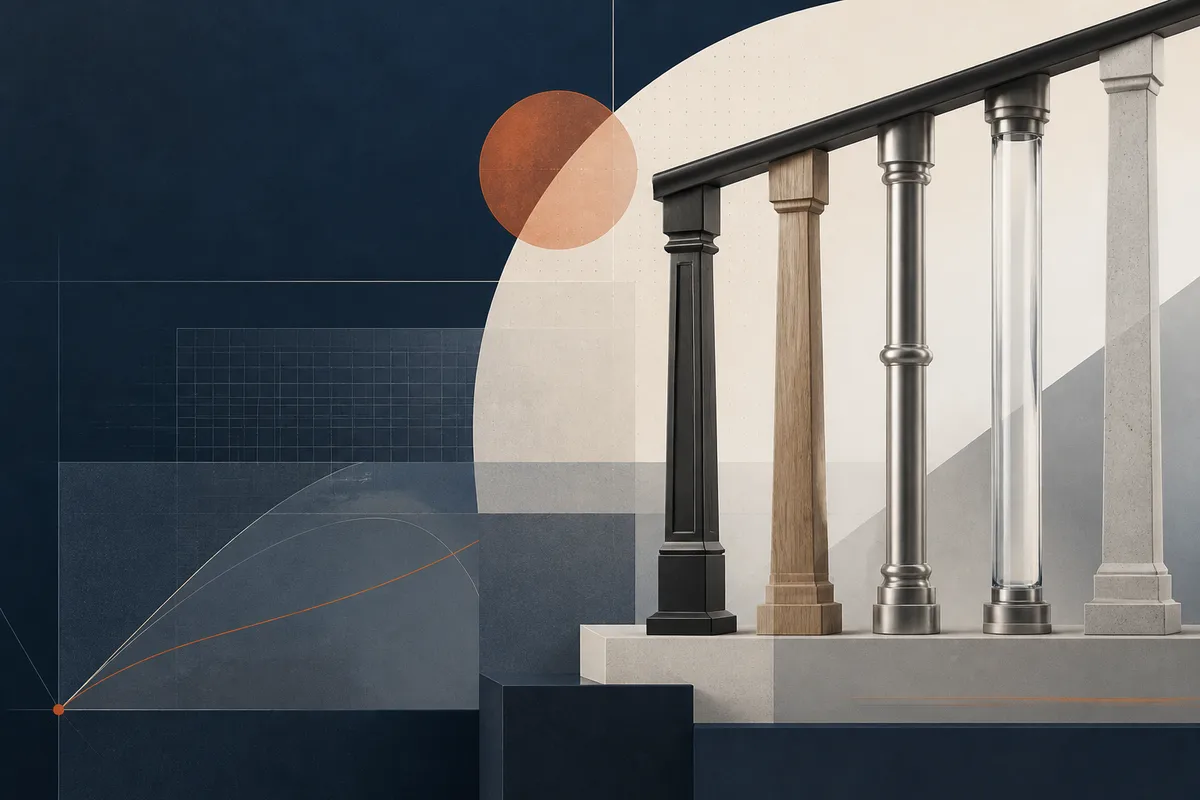
The Baluster Material Matrix: Balancing Weight, Cost, and Flex
Homeowners often prioritize aesthetics when selecting balusters, yet the physical properties of the material dictate how the system handles the daily kinetic energy of a busy household. A railing that looks sturdy but flexes under the weight of a leaning adult creates a psychological sense of instability, regardless of its actual load-bearing capacity. The choice between hollow and solid components is less about visual style and more about the management of structural tension and vibration.
This guide breaks down the performance metrics of wood and metal balusters based on weight, cost, and deflection. Whether upgrading a legacy system or installing a new Interior Stair Railings setup, understanding these mechanical differences ensures the final assembly meets the demands of high-traffic environments.
Why Standard Material Selection Often Fails
When balusters are chosen solely for their profile, the railing system often suffers from "ghost movement" or persistent rattling. These failures typically stem from three specific oversights:
- Underestimating the impact of humidity on wood-to-metal connection points, leading to loose spindles during seasonal shifts.
- Selecting hollow balusters for long, straight runs where the lack of mass allows harmonic vibration when activity occurs nearby.
- Failing to account for the increased shear force exerted on mounting shoes when using top-heavy solid iron balusters on thin treads.
- Overlooking how different powder coating textures affect the grip and safety of the railing for elderly residents.
The Playbook for Baluster Material Selection
Managing a railing upgrade requires a disciplined look at the physics of the staircase. The following steps define how to match material properties to the specific needs of a home.
1Assess the Foot Traffic and Impact Risk
High-traffic homes require materials with high impact resistance and low flex. Iron balusters are heavy-duty and resist wear, making them a long-lasting choice. In quieter environments, lightweight aluminum or wood may be preferred for their easier installation and lower strain on the underlying stair structure.
2Evaluate the Structural Support System
The weight of the baluster must be compatible with the stair tread material. Heavy solid iron spindles provide a premium feel but can stress soft wood treads if not properly blocked from underneath. Conversely, hollow aluminum is ideal for retrofitting older stairs where the goal is to improve aesthetics without adding significant dead weight to the housing stock.
3Compare Maintenance Requirements
Wood balusters require periodic painting or staining to prevent drying and cracking, especially in areas with varying humidity. Composite balusters and powder-coated aluminum balusters are excellent choices that offer long-lasting performance and resist fading or chipping. While metal options are virtually maintenance-free, a scratched surface may require more technical repair than a wooden spindle.
4Determine the Desired Tactile Experience
The "feel" of a railing is largely determined by the density of the balusters. Wooden balusters offer a timeless, warm look, while metal options provide a different structural profile. Species such as Red Oak, White Oak, Cherry, Walnut, and Maple are commonly selected when the balusters will remain visible as natural wood.
The measurement of how far a baluster bends under a specific lateral load, indicating the overall stiffness of the railing system.
The Weight vs. Flex Correlation
In the world of stair geometry, mass equals stability. A solid iron baluster provides significant mass that acts as a damper; when someone pulls on the handrail, the weight of the solid balusters resists the movement. Hollow balusters rely entirely on the strength of their top and bottom fasteners to maintain rigidity.
For long spans of railing, mixing hollow and solid balusters is a common industry tactic to balance cost and weight. Placing solid balusters at the start, end, and middle of a run can significantly reduce the "bounce" of the entire system. Because Nashville experiences humidity fluctuations, which can cause wood to expand and contract, metal balusters provide a stable constant in these shifting conditions.
How Nashville Stair Railing Helps
A professional railing project begins with a site assessment to determine the integrity of the existing stair stringers and treads. The process involves measuring the rise and run to ensure the new baluster spacing adheres to safety codes, preventing gaps larger than four inches. A typical scope of work includes removing old spindles, reinforcing the handrail connections, and precision-drilling for the new material choice. Homeowners should have their preferred style and a general idea of their budget ready when visiting Nashville Stair Railing for a consultation. A sound scope will detail the specific fastening hardware and any necessary structural blocking required to ensure the new railing feels as solid as it looks.
Frequently asked questions
Is there a difference in strength between hollow and solid iron balusters?
Both hollow and solid iron balusters meet standard residential building codes for strength when installed correctly. The primary difference lies in the "feel" and sound; solid balusters are heavier and do not produce a ringing sound when tapped. Hollow balusters are easier to cut during installation and put less stress on the stair treads.
How does humidity affect wood baluster choices?
Climate-driven humidity cycles cause natural wood to expand and contract. This cycle can eventually loosen the glue or nails holding balusters in place, leading to squeaks. Using kiln-dried hardwoods like oak or maple, or opting for metal, mitigates these moisture-related issues.
Are metal balusters more expensive than wood?
Generally, basic wood balusters have a lower material cost than metal, but labor costs can be higher due to the need for sanding and painting. Powder-coated aluminum is often more expensive upfront than wood but saves money over time because it never requires refinishing. Solid iron is typically a higher-cost option due to material weight and the tools required for cutting.
Can I mix wood and metal in the same railing?
Mixing materials is a standard design choice, often featuring a wooden handrail and newel posts with metal balusters. This combination provides the warmth of wood where the hand rests and the modern, slim profile of metal for the spindles. It also allows for greater structural rigidity by using the wood posts as the primary anchors.
What are the local rules for baluster spacing?
Local building codes generally require that balusters be spaced closely enough so that a four-inch sphere cannot pass through any point of the railing. This is a safety measure designed to prevent small children from getting stuck or falling through. Reference the Nashville.gov guidelines for specific diagrams on open fence and railing designs.
Which material is best for high-impact durability?
Balusters made of more durable materials, such as stone or metal, will typically last longer than those made of less durable materials. Solid steel or iron is a robust choice because it resists wear and maintains structural integrity. The weight of solid metal also prevents the railing from rattling during heavy daily use.
What happens when you get in touch: you describe the situation, we ask the few questions that actually change the answer, and you get a clear scope and next step — no obligation.