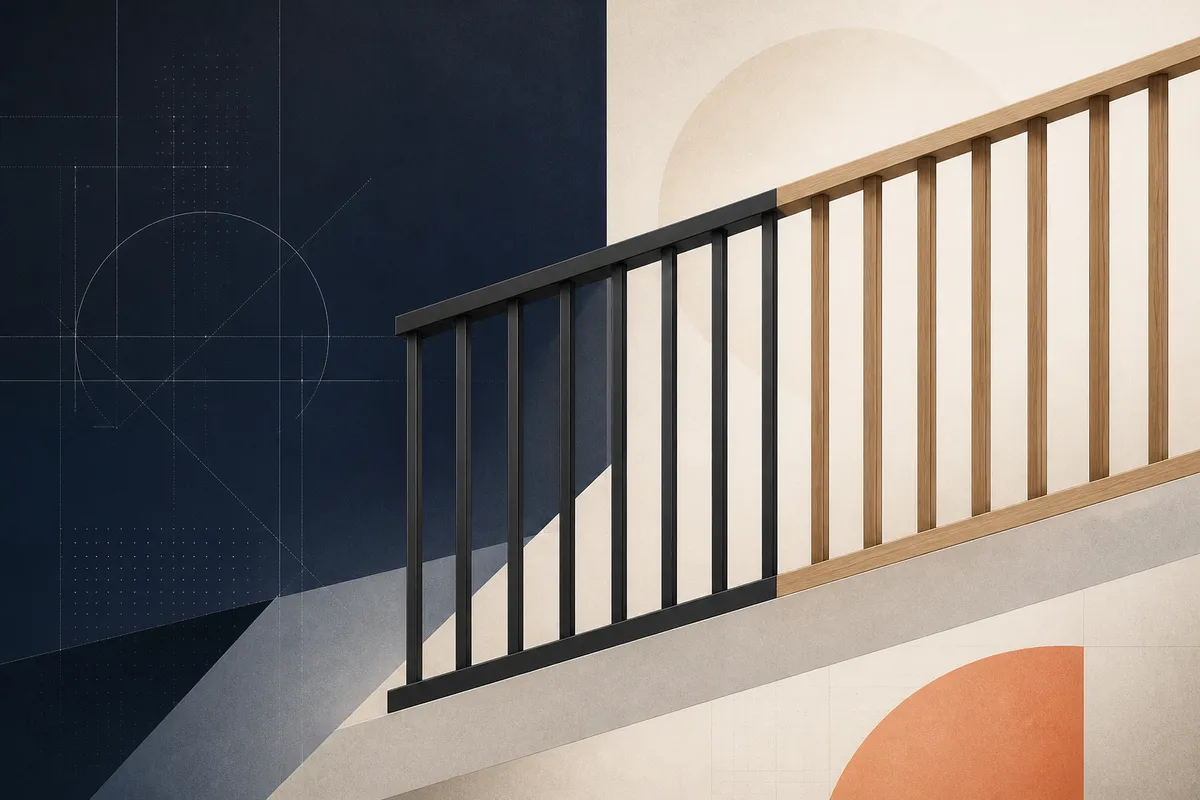
The Engineering of a Rigid Rail: Steel vs. Wood Balusters
A railing that wobbles is a railing that fails its primary psychological and structural purpose. In the Nashville Service Area, many homeowners mistake a "shaky" handrail for a loose bolt when the issue is often material deflection. Deflection is the technical term for how much a baluster bends under load; if the spindles are too thin or the material is too ductile, the entire system feels unstable regardless of how tight the fasteners are.
This guide breaks down the structural anatomy of hollow steel, solid steel, and wood balusters. It is intended for property owners evaluating a Baluster Replacement or a new installation who want to move beyond aesthetics and understand the lateral force resistance required for a safe home.
Why Railing Systems Feel Unstable
Safety in a stair system is not just about the strength of the handrail, but the collective rigidity of the infill. When a system fails to feel "solid," it is usually due to one of three mechanical shortcomings:
- Low modulus of elasticity in the baluster material, leading to excessive bending under weight.
- Inadequate anchoring depth where the spindle meets the tread or the handrail.
- Insufficient diameter or wall thickness to resist the lateral loads common in high-traffic residential areas.
- Variations in moisture content in wood spindles, which can lead to shrinkage and loosened connections over time.
The measurement of how far a structural member displaces from its original axis when a specific lateral force is applied.
The Structural Playbook for Baluster Selection
Choosing between materials requires an understanding of how they handle tension and compression.
1Evaluate Lateral Load Requirements
A railing must be more than a visual barrier; it is a structural safety device. According to the Nashville.gov residential permit procedures, a property owner occupying a single-family residence may obtain a permit, but the work must still adhere to safety standards regarding structural integrity. The balusters must collectively support the handrail so it does not bow when a person leans their full weight against it.
2Compare Hollow vs Solid Steel Balusters
In the debate of hollow vs solid steel balusters, the difference lies in weight and "stiffness" perception. Solid steel is significantly heavier and offers the least amount of flex, making it the gold standard for a rock-solid feel. Hollow steel, while easier to cut and install, relies on its outer diameter for strength; if the wall thickness is too thin, the railing will have a noticeable springiness when shaken.
3Assess Wooden Spindle vs Iron Strength
Wood spindles offer a classic aesthetic but behave differently under stress. While a thick oak spindle can be very rigid, wood is a natural material subject to environmental changes. In the humid climate described by the National Weather Service for Nashville, wood can expand and contract, potentially loosening the joinery. Iron and steel do not suffer from this volumetric instability, providing a more consistent fit year-round.
4Account for Anchoring and Pivot Points
The point where the baluster enters the floor is the fulcrum. For hollow steel, installers often use shoes or specific inserts to create a tight bond. Solid steel is often "epoxied" or set deeper into the wood tread to minimize the pivot. If the anchoring is shallow, even the strongest solid steel spindle will allow the handrail to wobble.
The Mechanics of a Silent Staircase
Achieving a rigid stair system involves more than just picking the strongest material. It requires a synergy between the handrail, the newel posts, and the balusters. A professional scope of work typically involves calculating the spacing to ensure it meets the 4-inch sphere rule while choosing a baluster gauge that complements the length of the handrail run. Longer runs naturally have more flex, so they often require the higher density of solid steel or reinforced wood posts to maintain stability.
How Nashville Stair Railing Helps
A typical project begins with a structural assessment of the existing stringers and treads to ensure they can support a new railing system. For homeowners in Davidson County, the process generally includes selecting a material profile—hollow steel for budget-friendly modernism or solid iron for maximum rigidity—and determining the appropriate anchoring method for the specific floor type. A sound scope of work should clearly outline the removal of old components and the precise drilling required for the new spindles. For those ready to begin a project, calling (615) 437-4214 provides a direct line to discuss specific site requirements.
Frequently asked questions
Is solid steel always better than hollow steel?
Not necessarily, but it is heavier and feels more substantial. Hollow steel is often preferred for modern, minimalist designs because it is lighter on the structure and easier to install, though it may have slightly more "give" over long spans.
How do I stop my wood spindles from rattling?
Rattling usually occurs when wood shrinks due to low humidity or when the original adhesive fails. A professional repair often involves injecting specialized adhesives into the pivot points or installing small, inconspicuous shims to fill the gap between the spindle and the handrail.
Do I need a permit to change my balusters in Nashville?
According to Nashville.gov, permits are generally required for construction activities, though simple cosmetic repairs may differ. It is always best to verify with the local codes department if you are changing the structural spacing or height of the railing.
Which material is best for the Nashville climate?
Steel and iron are more stable in the varying humidity levels reported by the National Weather Service. Wood is susceptible to the region's moisture shifts, which can lead to squeaking or loosening if not sealed and installed with precision.
Can I mix wood and metal balusters?
Yes, this is a common design choice where wood newel posts and handrails are paired with metal balusters. This combination often provides the best of both worlds: the warmth of wood at touchpoints and the rigid, low-deflection strength of metal for the structural infill.
What happens when you get in touch: you describe the situation, we ask the few questions that actually change the answer, and you get a clear scope and next step — no obligation.